Thursday, January 30, 2020


SCOTUS approves immediate Trump crackdown


The Supreme Court said Monday it will allow the Trump administration to begin enforcing a controversial new policy making it harder for low-income legal immigrants to obtain green cards or visas. 

The administration's new, expanded “public charge” rule, which makes it easier for officials to bar immigrants who use, or are deemed likely to use, non-cash government benefits such as Medicaid or food stamps, is one of the most consequential policy changes by the Trump administration to date in its efforts to curtail legal immigration. (Under previous practice, the public charge rule was only applied to immigrants who were considered likely to receive cash welfare payments.) 

Like a number of controversial rules, it has been challenged in federal court by immigration advocates and several states. The lawsuits are still making their way through the judicial system, but a stay on enforcing the change imposed by a federal judge in the Southern District of New York was lifted by the high court Monday in a 5-4 decision that broke along familiar ideological lines. Other rules that have also been allowed to take effect pending a final resolution in the courts — a process that can take years — include the travel ban for nationals of several majority-Muslim countries, a change in asylum rules affecting Central American migrants who arrive at the southern border and the diversion of military appropriations for border wall construction.

The Trump administration’s approach of imposing its hard-line views by presidential proclamation, executive orders and regulatory changes rather than through Congress, has been met with lawsuits across the country — and resulted in a much larger role for the courts in shaping immigration policy.

Judges in federal district courts in Washington State, California, Hawaii and elsewhere have granted emergency requests for nationwide injunctions to block the government from implementing the policies in question while the case plays out in court. The administration has responded by asking higher courts to overturn the injunctions, and in cases that have reached the Supreme Court has generally prevailed. 

The first time the Supreme Court took the unusual step of weighing in on an immigration-related case during the Trump administration was in December 2017, when the court ruled that a third version of Trump’s travel ban, which restricted entry to the U.S. for nationals of Chad, Iran, Libya, North Korea, Syria, Venezuela, Somalia and Yemen could fully take effect while legal challenges continued to make their way through the courts. The decision, issued nearly six months before the Supreme Court would actually hear arguments in the travel ban case, overturned earlier orders by federal judges in Maryland and Hawaii to block parts of the updated ban while the lawsuits against it proceeded. 

In June 2018 the Supreme Court ruled in the administration’s favor on the merits of the travel ban. 
Trump signs a travel ban executive order as Vice President Mike Pence, left, and former Secretary of Defense James Mattis look on, Jan. 27, 2017. (Photo: Carlos Barria/Reuters)

Since then, the Supreme Court has overturned injunctions by federal judges in a number of other immigration-related cases, granting the Trump administration permission to implement other policies amid ongoing litigation, including a requirement that asylum seekers who arrive at the U.S. southern border after traveling through another country — in practice, Central American migrants by way of Mexico — must show that they requested and were denied asylum in the country they transited. In another ruling over the summer, the justices once again voted along ideological lines to allow the Trump administration to continue using military funds to build sections of the border wall. 

The conservative justices of the Supreme Court aren’t the only ones ruling in Trump’s favor. Last May, the Ninth Circuit Court of Appeals ruled that the administration could continue forcing asylum seekers to remain in Mexico while awaiting hearings in the U.S., overturning a lower court’s injunction blocking implementation of the policy formally known as the Migration Protection Protocols amid ongoing lawsuits. 

Karen Tumlin is a longtime civil and immigrant rights litigator who has served as counsel in a number of high-profile legal challenges to Trump administration actions on immigration, including the effort to terminate legal protections for so-called Dreamers and the various iterations of the Muslim travel ban. She told Yahoo News that the history of the travel ban case, in which the Supreme Court overturned an injunction that had been upheld by multiple lower courts and then eventually ruled in favor of the policy, raises concerns about the future of policies like the public charge rule. 

In the travel ban case, Tumlin said, “It turned out the stay result was 100 percent predictive of what the Supreme Court ultimately did.” In the public charge case, she admits it may be hard to find a justice among the five who voted to allow the rule to take effect to change his mind when the case finally reaches the court, especially if the government can show that “the sky isn’t falling.” 

“It shouldn’t be that way,” she told Yahoo News. “Just because a divided court allows something to take effect, that shouldn't be the writing on wall for [the] ultimate decision.”


Demonstrators at a rally outside the U.S. Fourth Circuit Court of Appeals in Richmond, Va., Jan. 28, 2020. (Photo: Steve Helber/AP)

Justice Neil Gorsuch, one of the five justices in the majority, wrote in a separate concurrence explaining his vote to allow implementation of the public charge rule that “the real problem here is the increasingly common practice of trial courts ordering relief that transcends the cases before them.” 

“By their nature, universal injunctions tend to force judges into making rushed, high-stakes, low-information decisions,” Gorsuch argued, writing that the “increasingly widespread” use of such orders in recent years “is not normal.”

“He’s right,” said Jesse Bless, director of the litigation department at the American Immigration Lawyers Association. “It's not normal because the administration’s policies and the way they’re issuing them are not normal.”

“I’m not a historian, I’m a trial lawyer, but I’ve never seen a period in time when courts have been asked to do so much not as a result of legislation, but as a result of executive power,” Bless told Yahoo News. He suggested that Gorsuch’s comments reflect “a growing frustration, by everyone, on the way in which [immigration policy] is being settled in the courts.”
Migrants from Honduras wait in line at the U.S.-Mexico border crossing in Tijuana, Mexico, Sept. 12, 2019. (Photo: Sandy Huffaker/AFP via Getty Images)

Ultimately, the absence of congressional action on immigration has enabled the executive branch to push the boundaries of what is legal, said Sarah Pierce, a policy analyst at the Migration Policy Institute, a nonpartisan think tank. This trend began under President Barack Obama, whose administration faced legal challenges over a number immigration policies including the Deferred Action for Childhood Arrivals program, a work authorization extension for foreign students post-graduation, and the use of family detention. But, Pierce said, “the amount the Obama administration was entangled in the court system is laughably small compared to the Trump administration.”

Pierce suggested that the new public charge rule could be “one of the most problematic policies to go into place while legality is being questioned.” Studies predict that the proposed changes will have serious impacts on many legal immigrants as well as their U.S. citizen children and spouses, giving it the potential to dramatically reshape who is allowed to immigrate to the United States. 

The White House praised the Supreme Court’s decision on Monday as a “massive win for American taxpayers, American workers and the American Constitution. This decision allows the government to implement regulations effectuating longstanding federal law that newcomers to this country must be financially self-sufficient.”

Bless argued that such victories “emboldens an administration who wants to build an invisible wall in this country” and “sets the stage for immigration to become a very big part of the November election.”

Sunday, December 22, 2019


STEVE AND PERRY JOHN AUCH: NASTY 


HATE CRIME MISDEEDS 


Have you experienced a variety of VANDALISM AND CRIMES


A hate crime that lasted more than 30 years from a particular neighbor.


Neighbors can make a big difference when it comes to feeling comfortable in your own home. When you’re surrounded by friendly people, it makes your neighborhood all the more safe and desirable.


If you have bad neighbors, though, it can seem like your home is practically unlivable. Some people may even be tempted to move, as there’s not much you can do about the people next door. If you think your neighbor is doing you wrong, what do you do? Report his transgressions to the police? Confront him yourself? For some homeowners, the answer is “catch him in the act. Easier said than done.


If you ask people across the country whether they have been a victim of a bias crime because of their race, tens of thousands have stories to tell.


That figure does not include hate crimes motivated by more than one bias—an assault against a black woman, for example, may be motivated by their race. 

This widening gap reflects key challenges for police departments dealing with hate crimes.


Intentional property damage may be considered a form of violence, albeit one usually (but not always) less reprehensible than violence which does bodily harm to other living beings, ie. shooting 4 beloved pet dogs. For example, loosening the tubes of the transmission cooler to fail, become inoperable may qualify as both property damage and lead to bodily harm. On a similar note, certain forms of property damage may prevent bodily harm, such as breaking a piece of machinery like a ratchet puller, that was about to injure a person, after the lug nut was taken out.


Some argue that property damage signals a willingness to do bodily harm or otherwise intimidates the free flow of communication in political oreconomicdebates. To obtain a conviction the prosecution must ordinarily prove that the accused damaged or destroyed some property, that the property did not belong to the accused, and that the accused acted willfully and with malice. In the absence of proof of damage, the defendant may be guilty of Trespass, but not vandalism. If there is no proof that the defendant intentionally damaged the property, the defendant cannot be convicted of the crime but can be held liable for monetary damages in a civil action.


It started back when this relative of mine began  building his house out in the country. He noticed some electrical wirings inside the house has been cut and tampered. His brand new car’s finish poured with acid. The heat pump connections has been loosened to make the freon escape and render the air conditioning to mal function to this day as he reported to me.


Then he loosened the the plumbing to the solar water heater, making a mess inside the house. His modus operandi is to loosen attachments, little things that will later on lead to bigger damages. Like loosen the screw of the transmission cooler twice, rendering the transmission to leak transmission oil and therefore a malfunction of the transmission itself. The motorhome, at present is un operable, since Auch did this vandalism twice.


Damage to the motorhome include the tamper of the water tank being busted and broken together with the CV joints pierced and needed to be replaced. My relative knew it was him, proof or circumstance is the M.O. When my cousin was constructing a wire fence between their common boundary with a ratchet puller, he loosened the bolt of the main pulley, so the next time my relative use it, will explode in his face. There are no other neighbor with the same access as him.


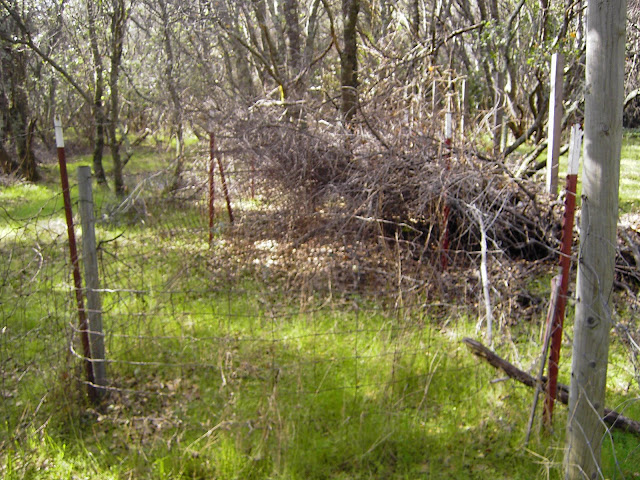
Looking to the west, the difference of fence line is apparent. Also, the neighbor trash my cousin’s side of the fence. Auch’s house is in the background and quite close to the fence line, and that could explain his motive for encroachment of about 8’ to 18’. The length of that encroachment is 665’ long, authenticated with a survey.


Looking westward, my cousin’s side of the property is used as a trash bin by the Auchs. One of the wood stakes located at the right of the picture was thrown assunder. My cousin have to trust this large post installed by Auch as the beginning of his south boundary.


View to the east, green fence post was set on (true boundary) the remaining survey stakes, made straight by a taut rope. 


The red fence post was installed by Auch that encroached on my cousin’s property as much as 16’. This rope solution was made because of some intermediary stakes were missing, vandalized and stolen, including the corner monument. Later on the monument appeared, but on the wrong spot. This encroachment by Auch run the whole length of the property (665 feet long) until the survey was made.


Monument survey reappeared after it was reported to the Sheriff. The theft was solved, but the monument marker was placed in the wrong place, and therefore compromising the integrity of the survey pin/monument.


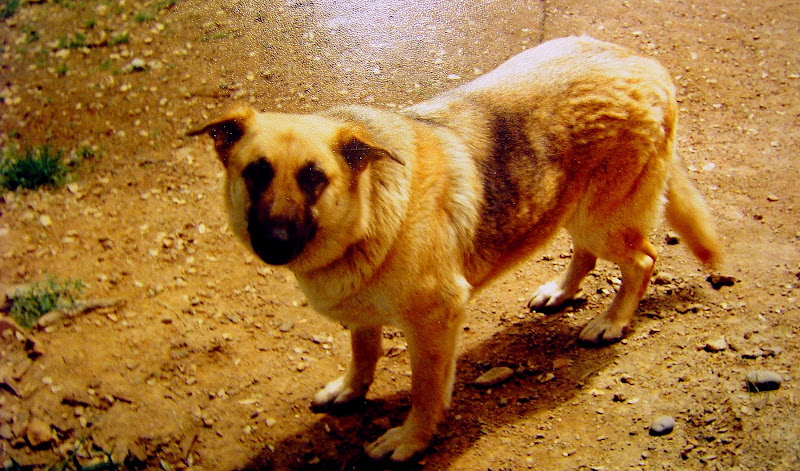
Worst of all, the neighbor killed four of my cousins pet dogs inside the cousins property with a silenced 22 caliber rifle. Sassy, a beautiful german shephered that meets my cousin on the corner of the property by the main road every time he is back from work.


Sassy the beloved dog. (shot to death inside my cousin’s property)


Max was shot to death inside my cousin’s property. Two other dogs met the same fate, Bear in 1980, and Willie the Rottweiler shot in the head as he stuck his head outside my cousin’s garage door in 1999.


Another dog, Mickey the Akita was tormented with pellet shots.


That neighbor shot his roof, to make it leak and thus propagate black mold. After replacing the roof, he observed the line of fire and the trajectory lead from the house of the nasty neighbor. The cost of the roof replacement was $37,000. Not only that, the chimney pipe and cover are riddled with rifle shots. My relative is at wits ends and leave it to you readers the answer to his problems and how to deal with this injustice, as the police will not bother due to the Statute of Limitations expirations on these crimes.


Now it is beginning to happen again, as his progenies are doing the same thing all over again, around the property. Cameras abound my cousin’s house, so that vandalism from this particular neighbor are now limited to the range and detection of the cameras.


So now, vandalism like destruction of plantings happen at the outskirts of my cousin’s house. Oh now, he makes calls in the wee hours of the morning and then hang up.


The neighbor’s name is Steve John Auch together with his son Perry John Auch. Steve is now in his late sixties, but is still active in his vandalism with Perry Auch as his surrogate. His telephone. His address is 1520 Winding Oak Ln., El Dorado Hills, CA. 95762. Perry’s photo below


Why Aren’t Police Doing a Better Job Tracking and Investigating Hate Crimes?

First, there are missing cases that police records don’t capture, because more than half of victims don’t report to police. That’s due to a variety of reasons, such as mistrust in police, a fear of not being taken seriously or uncertainty if they experienced a crime.

We know that some police departments don’t send any data to the FBI, or claim to have no hate crimes. Another issue is that some police departments don’t do a good job investigating and tracking hate crimes. We’ve found some victims who argue that the police don’t take hate crimes seriously enough, sometimes resisting taking a report or lacking the basic knowledge about what box to check on a police report. We found that some police departments marked crimes as anti-heterosexual when they were actually anti-gay or not even hate crimes. That means that sometimes, even if police are tracking hate crimes, the data they send to the FBI is flawed.

Another key problem is that police training on hate crimes varies very widely. Only a dozen states have statutes requiring police academies to provide hate crimes training, and even if recruits do get instruction, it’s sometimes for as little as a half an hour.

To improve hate crime tracking, “You have to have a combination of training, executive leadership, and some kind of infrastructure that is sustained and continuing,” Brian Levin, a hate crimes researcher, told ProPublica.
What About Prosecutions?

Hate crimes are notoriously difficult to prosecute, because attorneys must prove the defendant’s intent was based on bias. Adding hate crime charges can introduce layers of complexity to otherwise straightforward cases of assault or vandalism. A ProPublica investigation found that of the nearly 1,000 hate crime cases reported to police in Texas from 2010 to 2015, fewer than 10 were successfully prosecuted.

Some cities, such as Boston and New York, have dedicated bias crime units that provide expertise and added scrutiny to hate crime cases in order to build evidence for the prosecution. But in many places, it’s usually up to local police to investigate these crimes.


Sometimes, the FBI will send investigators in order to prosecute cases in federal court. But a News21 analysis found that just 100 hate crimes were prosecuted as federal crimes from January 2010 to July 2018.


Intentional property damage may be considered a form of violence, albeit one usually (but not always) less reprehensible than violence which does bodily harm to other living beings, ie. shooting 4 beloved pet dogs. For example, loosening the tubes of the transmission cooler to fail, become inoperable may qualify as both property damage and lead to bodily harm. On a similar note, certain forms of property damage may prevent bodily harm, such as breaking a piece of machinery like a ratchet puller, that was about to injure a person, after the lug nut was taken out.


Saturday, August 24, 2019


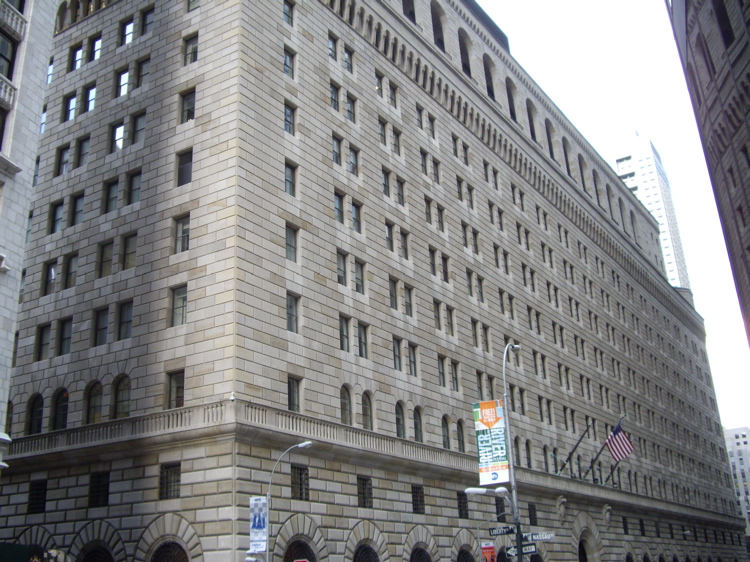
ABOLISH THE FEDERAL RESERVE
America has real enemies, the shadow government like the cabal who control our money and the bosses, vermin who have infested the highest echelons of power. In the wake of their murder of JFK, they understandably feared exposure. The biggest threat was coming from honest, idealistic, politically-engaged citizens, most of whom leaned toward the political left in general. 


ON JUNE 4 1963, President John F. Kennedy Signed Executive Order #11110, stripping the privately-owned Federal Reserve Bank of its power to loan money to the United States Federal Government at interest. With the stroke of a pen, President Kennedy declared that the privately-owned Federal Reserve Bank would soon be out of business.


~ When President Kennedy signed this Order, it returned to the Treasury Department the Constitutional power to create and issue money without going through the privately- owned Federal Reserve Bank. United States Notes were then issued as an interest-free currency.

~ President Kennedy was assassinated on November 22 1963 and the United States Notes he had issued were immediately taken out of circulation.

SEE: http://www.silverbearcafe.com/private/JFK.html

[...] Why did President Lyndon Baines Johnson not continue President Kennedy’s Executive order? Was he afraid for his own life?

While the source of this information does not come from Mainstream media, it is believable and available elsewhere on the Net, I have also seen a list of the private US banks that own the Fed, perhaps the above names are the actual people behind it all.

Yet they may not be omnipotent, the Israeli press (Ynet) is opinioning that Israel should no longer assume the US will automatically come to its aid.

No wonder Europe and the US are so close!


“United States Notes” were issued as an interest-free and debt-free currency backed by silver reserves in the U.S. Treasury. We compared a “Federal Reserve Note” issued from the private central bank of the United States (the Federal Reserve Bank a/k/a Federal Reserve System), with a “United States Note” from the U.S. Treasury issued by President Kennedy’s Executive Order. They almost look alike, except one says “Federal Reserve Note” on the top while the other says “United States Note”. Also, the Federal Reserve Note has a green seal and serial number while the United States Note has a red seal and serial number.


Thought by many to be a government organization maintained to provide financial accountability in the event of a domestic depression, the actual business of the Fed is shrouded in secrecy. Many Americans will be shocked to discover that the principle business of the Fed is to print money from nothing, lend it to the U.S. government and charge interest on these loans. Who keeps the interest? Good question. Find out as the connective tissue between this and other top-secret international organizations is explored and exposed. 


In another disturbing finding, the GAO said that on Sept. 19, 2008, William Dudley, who is now the New York Fed president, was granted a waiver to let him keep investments in AIG and General Electric at the same time AIG and GE were given bailout funds. One reason the Fed did not make Dudley sell his holdings, according to the audit, was that it might have created the appearance of a conflict of interest.

To Sanders, the conclusion is simple. "No one who works for a firm receiving direct financial assistance from the Fed should be allowed to sit on the Fed's board of directors or be employed by the Fed," he said.

The investigation also revealed that the Fed outsourced most of its emergency lending programs to private contractors, many of which also were recipients of extremely low-interest and then-secret loans.

The Fed outsourced virtually all of the operations of their emergency lending programs to private contractors like JP Morgan Chase, Morgan Stanley, and Wells Fargo. The same firms also received trillions of dollars in Fed loans at near-zero interest rates. Altogether some two-thirds of the contracts that the Fed awarded to manage its emergency lending programs were no-bid contracts. Morgan Stanley was given the largest no-bid contract worth $108.4 million to help manage the Fed bailout of AIG.

A more detailed GAO investigation into potential conflicts of interest at the Fed is due on Oct. 18, but Sanders said one thing already is abundantly clear. "The Federal Reserve must be reformed to serve the needs of working families, not just CEOs on Wall Street."


The supreme illicit fraud of central banking embodied in the Federal Reserve, acts as a private piggybank for favored cartel thieves. The liquidity of unlimited credit transfers to banksters, especially at zero interest, financed by unimaginable new Treasury Bonds, indebting the American public; is a crime committed by outlaws. The significance of the evidence for the extent of the crony financial manipulations, that the controllers of international capital use to maintain their power strangle hold on humanity, needs to be fully exposed. Only when the beleaguered and downtrodden become sufficiently indignant to usury incarceration, will heads start to roll.

“The first top-to-bottom audit of the Federal Reserve uncovered eye-popping new details about how the U.S. provided a whopping $16 trillion in secret loans to bail out American and foreign banks and businesses during the worst economic crisis since the Great Depression. An amendment by Sen. Bernie Sanders to the Wall Street reform law passed one year ago this week directed the Government Accountability Office to conduct the study. “As a result of this audit, we now know that the Federal Reserve provided more than $16 trillion in total financial assistance to some of the largest financial institutions and corporations in the United States and throughout the world,” said Sanders. “This is a clear case of socialism for the rich and rugged, you’re-on-your-own individualism for everyone else.”


Yes, you read that correct, 16 TRILLION DOLLARS. When originally disclosed, there was minimal outrage.

“The FOMC approved these swap line arrangements to help address challenges in the global market for interbank lending in U.S. dollars. Many foreign banks held U.S. dollar-denominated assets and faced challenges borrowing in dollars to fund these assets. In contrast to U.S. commercial banks, foreign banks did not hold significant U.S. dollar deposits, and as a result, dollar funding strains were particularly acute for many foreign banks. The Board of Governors of the Federal Reserve System (Federal Reserve Board) staff memos recommending that the FOMC approve swap lines noted that continuing strains in dollar funding markets abroad could further exacerbate strains in U.S. funding markets. For example, foreign banks facing difficulties borrowing against U.S. dollar assets may have faced increased pressure to sell these assets at a time of stress, potentially putting downward pressure on prices for these assets. The dollar swap lines allowed foreign central banks to make dollar loans to banks in their jurisdictions without being forced to draw down dollar holdings of foreign exchange reserves or to acquire dollars directly in the foreign exchange market. An FRBNY staff paper noted that the dollar reserves of many foreign central banks at the start of the crisis were smaller than the amounts they borrowed under the swap lines and that efforts by foreign central banks to buy dollars in the market could have crowded out private transactions, making it more difficult for foreign banks to obtain dollars. This paper further noted that the Federal Reserve System (the Federal Reserve Board and Reserve Banks collectively) was in a unique position to provide dollars needed by foreign central banks to provide lender-of-last-resort liquidity to banks in their jurisdictions. The increase in reserves was offset through sales of Treasury securities and increasing incentives for depository institutions to hold excess reserves at FRBNY.”

“Another mystery that I would like to see addressed is the trillions of dollars of “off balance sheet transactions” that are unaccounted for at the Federal Reserve. This was brought up once during a Congressional hearing, but nobody seemed to have any answers.”

The $9,000,000,000,000 MISSING From The Federal Reserve YouTube captures the absurdity of Congressional oversight. The financial community that created fractional reserve banking is in total control of the political election process. As long as there is no accountability and consequences for outright theft, the money magicians continue to operate their fraudulent scheme of deception as the cornerstone of international economic transactions.

The FED’s grip on the global moneychangers’ racket is based upon maintaining the U.S. Federal Reserve funny money, as the reserve currency for the planet. The value and worth of Treasury Bills and Bonds are on the path to have the value of Reichsbank marks. Recognize the enemy that is destroying the country and world economy


Here is a candidate for president.

"We don't need to waste more money on a Commission." Spend let's say $30,000,000 at the most on $16,000,000,000,000? I guess that is too much to investigate on! Let's pay ourselves to the Bankers, because they love us, the Federal Reserve is of course Government-owned, if you say anything else, you are a crazy Conspiracy Theorist that hates freedom and liberty... Herman Cain is exposed as an operative. “